
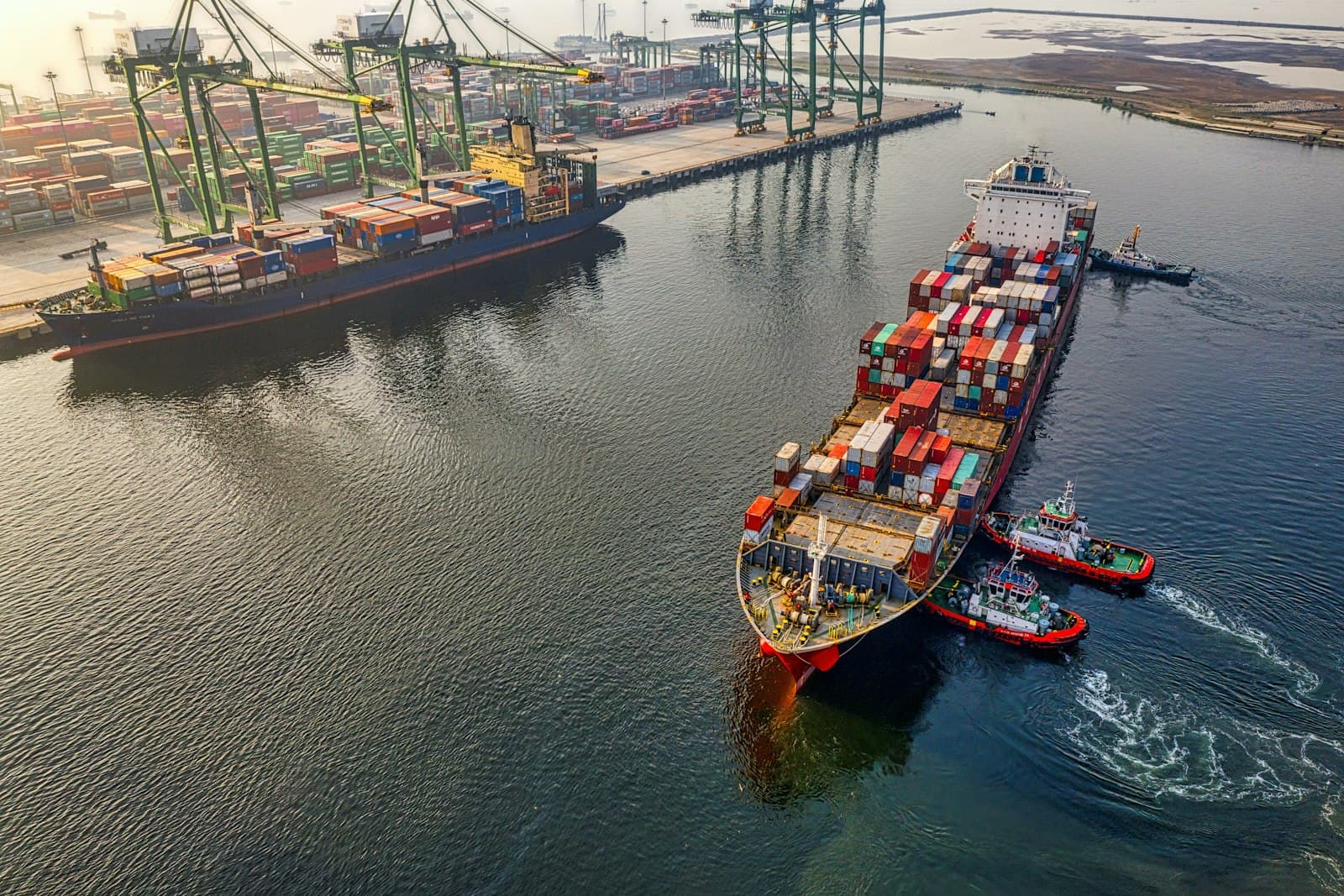
Chokepoints and Supply Chains
LFA Analysis Desk · 08 July 2026 · 3 min read
Ask most economic resilience programs to name their top risk and they will point to tariffs, sanctions regimes, or supplier concentration in a specific industry. These are real risks, but they sit downstream of a more fundamental one that gets comparatively little attention: the physical geography of maritime trade routes through a small number of straits and canals that have no practical substitute.
Strait concentration is a structural risk, not a tail risk
A handful of chokepoints, a few key straits and two major canals, carry a share of global maritime trade that is genuinely difficult to overstate, and the alternative routes around them typically add weeks of transit time and substantial cost. This concentration is not a temporary artifact of current shipping patterns that will diversify on its own. It is a function of geography and the economics of vessel scale, and it means that a disruption at any single chokepoint, whether from conflict, an accident, or deliberate interference, propagates through global trade far faster and further than most national risk assessments account for. We treat strait concentration as a structural feature of the system, not a low-probability tail event, because the historical frequency of disruptions at these points does not support treating it as rare.
The economics of insurance and rerouting
When a chokepoint becomes unreliable, the first response is rarely an immediate rerouting decision. It is an insurance repricing, as war-risk premiums and cargo insurance rates adjust to reflect the new probability of loss or delay. Those premium increases function as an early, quantifiable signal of how seriously the market is treating a given disruption, often before shipping companies have made public statements about rerouting. We track these insurance signals closely for clients because they tend to lead the more visible operational responses by days or weeks, giving decision-makers a meaningful head start on adjusting their own exposure.
The insurance market prices chokepoint risk faster and more honestly than most governments are willing to state it publicly.
Ports as strategic assets, not just logistics nodes
We increasingly advise clients to think of major port infrastructure the way they would think of any strategically significant asset, subject to ownership scrutiny, access risk, and contingency planning, rather than as a purely commercial logistics decision. A port that handles a disproportionate share of a nation's imports or a client's regional supply chain is a single point of failure regardless of who owns or operates it, and ownership structures that introduce foreign state influence over critical port infrastructure add a layer of exposure that conventional supply chain risk models were not built to capture. This is an area where we see a persistent gap between how seriously clients treat, for example, semiconductor supplier concentration and how lightly they treat the port their semiconductors actually move through.
Stress-testing national and corporate exposure
The practical output of this work is a stress test: what happens to a client's supply chain, or a government's import-dependent sectors, if a specific chokepoint becomes unreliable for two weeks, for two months, or indefinitely. Building this requires mapping actual cargo flows against chokepoint dependency rather than relying on aggregate trade statistics, since the exposure of a specific client or sector can differ enormously from the national average. We have found that most organizations, once they see this mapped concretely, discover their chokepoint exposure is considerably higher than their existing risk frameworks suggested, simply because that exposure had never been isolated and measured on its own.
Geography does not negotiate
Trade policy can shift, tariffs can be renegotiated, and supplier relationships can diversify over a few years of deliberate effort. The physical geography of maritime chokepoints cannot be renegotiated on any comparable timeline. That asymmetry is why we treat chokepoint exposure as a foundational input to economic resilience planning rather than a secondary consideration, and it is the lens we recommend clients apply before assuming that a diversified supplier base has actually diversified their risk.
Article information
Written by LFA Analysis Desk
Published 08 July 2026
3 min read
Related topics
Ready to decode the human factor?
Contact UsRelated
More insights.
Field note Nº 06 · Geopolitics · 3 min read
The Map Is Not the Power Structure
Org charts and published policy documents describe how a government or institution says decisions get made, and they routinely fail to predict how those decisions actually happen.
05 August 2026
Field note Nº 04 · Defense & Security · 3 min read
Reading the Gray Zone
Hybrid threats are designed to operate just below the threshold where attribution is possible, which means the states that manage them well are the ones that stopped waiting for proof before they acted.
10 June 2026
Ready to decode the human factor?
Identify and effectively manage the key stakeholders, informal power brokers, behavioral drivers, loyalties and alliances that are shaping your current security, defense and intelligence challenge.
Contact Us